Architecting an ACID-Compliant Financial Ledger with MongoDB Transactions

It was a Thursday afternoon in late 2024 at BabyCloud when our billing audit logs flagged a $1,200 discrepancy. A pediatric consultation booking had been rescheduled three times in rapid succession by a user repeatedly clicking buttons in a poor network zone. This burst of events triggered concurrent escrow-release routines.
Due to a classic read-modify-write race condition, the consultant was credited twice, while the platform's escrow pool dropped below zero. Although we recovered the funds, the incident made it clear: our ad-hoc locking mechanisms weren't enough. We needed a bulletproof, double-entry audit ledger backed by ACID transactions.
Here is the post-mortem on how we restructured our financial transaction model using MongoDB Transactions to prevent concurrency errors forever.
The Concurrency Nightmare
In a marketplace model, funds shouldn't just instantly transfer from a client's bank card to an expert's bank account. At BabyCloud, we implement a clinical hold buffer. Funds are captured and held in an escrow pool for 48 hours following a consultation. This allows the parent to request a review if the service is not rendered or if there is an emergency.
Without atomic isolation, two concurrent requests executing at the exact same millisecond can read the same escrow balance, check that it's sufficient, and then write two separate debit updates. This is where transactions become necessary.
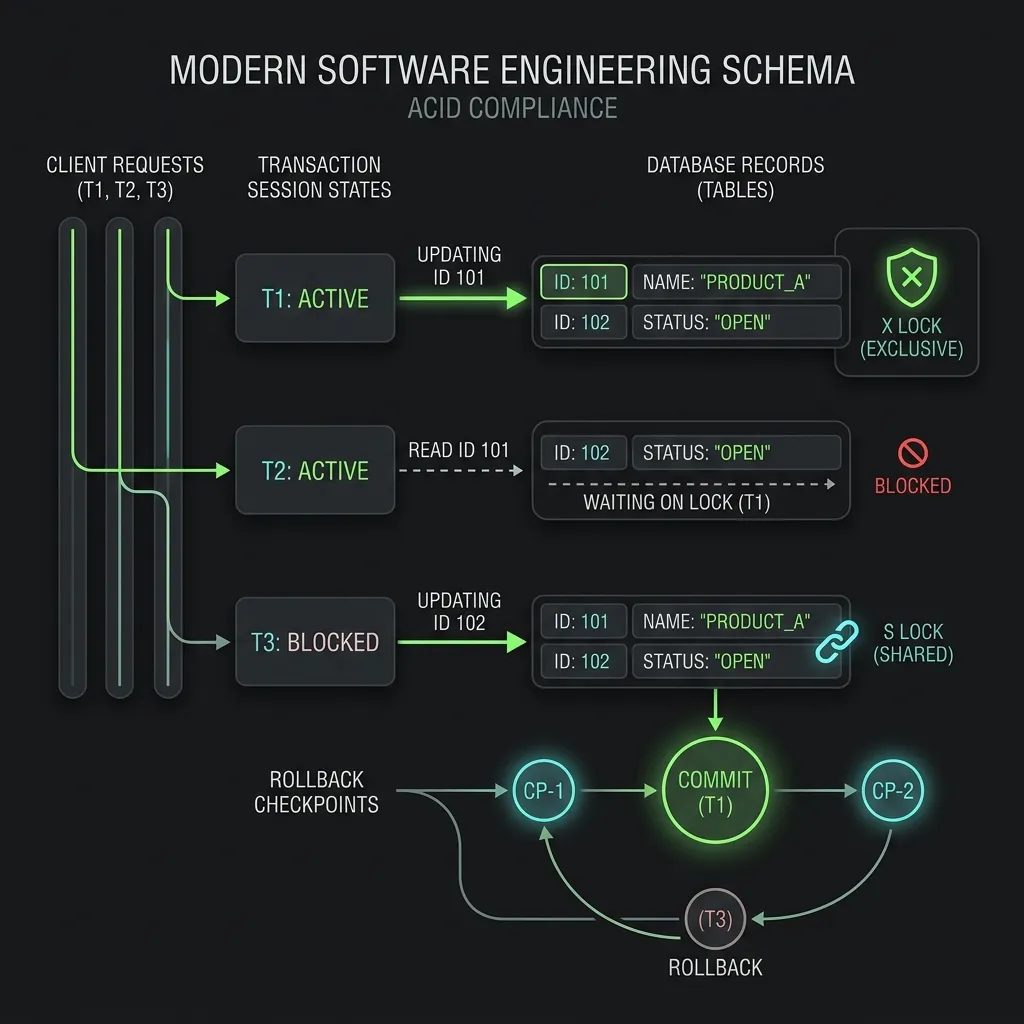
Designing the Double-Entry Schema
In financial systems, you never simply overwrite balances. If a wallet's cash balance goes from $100 to $150, you must record how that happened. To achieve double-entry properties, we set up two primary collections:
Wallets: Represents the current balance state. It splits funds into liquid and escrowed pools.LedgerTransactions: The immutable ledger log detailing credits, debits, holds, and releases.
interface Wallet {
  _id: ObjectId;
  userId: ObjectId;
  liquidBalance: number; // Stored in cents/paise to prevent float rounding bugs!
  escrowBalance: number; // Held until cleared
  currency: string;
  updatedAt: Date;
}
[!IMPORTANT] Why floats are dangerous: In Javascript,
0.1 + 0.2evaluates to0.30000000000000004because of binary representation limitations. In a ledger processing millions of entries, these fractional round-offs accumulate. Always multiply dollar or rupee inputs by 100 to parse them as integers (1250instead of12.50), and scale them back for display only.
Coding the Transaction Engine
Here is the implementation of our escrow release. It runs in a multi-document session, enforcing a snapshot isolation level. This guarantees that if a concurrent session alters the balances while our process is running, MongoDB will reject the commit, prompting a safe retry.
import { MongoClient, ObjectId, ClientSession } from 'mongodb';

interface ReleaseEscrowParams {
  walletId: ObjectId;
  amount: number;
  bookingId: ObjectId;
}

export async function releaseEscrowTransaction(
  client: MongoClient,
  params: ReleaseEscrowParams
): Promise<boolean> {
  const session: ClientSession = client.startSession();

  const transactionOptions = {
    readConcern: { level: 'snapshot' as const },
    writeConcern: { w: 'majority' as const },
    maxCommitTimeMS: 5000,
  };

  try {
    let transactionCompleted = false;

    await session.withTransaction(async () => {
      const walletsCollection = client.db('finance').collection('wallets');
      const ledgerCollection = client.db('finance').collection('ledger_transactions');

      // 1. Fetch current wallet inside the transaction session
      const wallet = await walletsCollection.findOne(
        { _id: params.walletId },
        { session }
      );

      if (!wallet) {
        throw new Error(`Wallet not found: ${params.walletId.toHexString()}`);
      }

      if (wallet.escrowBalance < params.amount) {
        throw new Error('Insufficient escrow balance to release.');
      }

      // 2. Perform atomic balances adjustments
      // The query condition escrowBalance: { $gte: params.amount } adds optimistic write checking
      const updateResult = await walletsCollection.updateOne(
        { _id: params.walletId, escrowBalance: { $gte: params.amount } },
        {
          $inc: {
            escrowBalance: -params.amount,
            liquidBalance: params.amount,
          },
          $set: { updatedAt: new Date() }
        },
        { session }
      );

      if (updateResult.modifiedCount !== 1) {
        throw new Error('Balance update failed due to write conflict.');
      }

      // 3. Write immutable record to the ledger
      await ledgerCollection.insertOne(
        {
          walletId: params.walletId,
          type: 'ESCROW_RELEASE',
          amount: params.amount,
          referenceId: params.bookingId,
          referenceType: 'BOOKING',
          createdAt: new Date(),
        },
        { session }
      );

      transactionCompleted = true;
    }, transactionOptions);

    return transactionCompleted;
  } catch (error) {
    console.error('[CRITICAL] Payout rollbacked. Error:', error);
    return false;
  } finally {
    await session.endSession();
  }
}Automating Payout Sweeps via Cron Jobs
To ensure that funds do not sit indefinitely in the escrow pool, we developed an automated worker sweep that query-filters for bookings where the consultation was marked complete and the 48-hour safety hold buffer has passed. The worker processes matured transactions in batches, executing each release inside its own transaction wrapper.
Here is the orchestrator script for the background scheduler job:
import cron from 'node-cron';
import { MongoClient } from 'mongodb';

export function initializePayoutScheduler(client: MongoClient) {
  // Execute the sweep hourly at the top of the hour
  cron.schedule('0 * * * *', async () => {
    console.log('[SCHEDULER] Initiating matured escrow release sweeps...');
    const db = client.db('finance');
    const bookingsCollection = db.collection('bookings');

    const safetyThreshold = new Date(Date.now() - 48 * 60 * 60 * 1000); // 48 hours ago

    try {
      // Find completed bookings that haven't been swept yet
      const bookingsToSweep = await bookingsCollection.find({
        status: 'COMPLETED',
        escrowCleared: false,
        completedAt: { $lte: safetyThreshold }
      }).toArray();

      console.log(`[SCHEDULER] Found ${bookingsToSweep.length} bookings ready to sweep.`);

      for (const booking of bookingsToSweep) {
        const success = await releaseEscrowTransaction(client, {
          walletId: booking.expertWalletId,
          amount: booking.escrowAmount,
          bookingId: booking._id
        });

        if (success) {
          await bookingsCollection.updateOne(
            { _id: booking._id },
            { $set: { escrowCleared: true, clearedAt: new Date() } }
          );
          console.log(`[SUCCESS] Swept escrow for booking: ${booking._id.toHexString()}`);
        } else {
          console.error(`[FAILURE] Escrow sweep aborted for booking: ${booking._id.toHexString()}`);
        }
      }
    } catch (error) {
      console.error('[SCHEDULER ERROR] Failed sweep run:', error);
    }
  });
}
Intercepting Transient Database Errors with Retry Loops
MongoDB transactions on replica sets or sharded clusters can raise transient exceptions (such as write conflicts or network resets). If a transaction fails with a TransientTransactionError code, the application should not bubble the error immediately; it should retry the transaction loop.
Below is our custom production connection wrapper designed to intercept these error codes and retry operations automatically before throwing a failure exception:
export async function runTransactionWithRetry<T>(
  client: MongoClient,
  txnFn: (session: ClientSession) => Promise<T>,
  maxRetries = 3
): Promise<T> {
  let attempt = 0;

  while (attempt < maxRetries) {
    const session = client.startSession();
    try {
      let result: T | undefined;
      await session.withTransaction(async () => {
        result = await txnFn(session);
      });
      return result as T;
    } catch (error: any) {
      attempt++;
      const isTransient = error.hasErrorLabel && error.hasErrorLabel('TransientTransactionError');

      if (isTransient && attempt < maxRetries) {
        console.warn(`[RETRY] Transient conflict on attempt ${attempt}. Retrying in 100ms...`);
        await new Promise(resolve => setTimeout(resolve, 100));
        continue;
      }

      throw error; // Bubble up if max retries exceeded or not transient
    } finally {
      await session.endSession();
    }
  }
  throw new Error('Transaction execution exceeded maximum retry thresholds.');
}
Key Lessons for Scaling Financial Ledgers
This transactional architecture has processed thousands of consultant sweeps with zero discrepancies since its release. If you are starting to scale an online marketplace or subscription billing engine, here are three lessons we recommend keeping in mind:
- Filter-Level Constraint Checks: The balance adjustment check
{ escrowBalance: { $gte: params.amount } }is evaluated at the database collection level during execution. This prevents standard read-then-write updates from committing obsolete cached numbers. - Idempotency Keys: Every payout triggers with an idempotency header key. If a user double-clicks, the second request fails the unique index constraint on
LedgerTransactionsimmediately, preventing duplicate balance manipulations. - Replica Set Topologies: MongoDB requires a replica set configuration to enable transaction support. If you run a standalone development database instance, you must configure a single-member replica set to support session variables.
Investing in double-entry schema design and strict database transactions early saves you from hard-to-debug race conditions as your traffic scales. Make sure your database isolation level is up to the task before you start processing financial operations.